How to read your business energy bill to reduce costs
Your business energy bill arrives in the post every month. Multiple pages of dense black and white text. You didn't go into business to sift through...
4 min read
Michael Potts
:
Jun 11, 2026 10:00:00 AM
Your business energy bill arrives in the post every month. Multiple pages of dense black and white text. You didn't go into business to sift through each carefully crafted word, you simply don't have the time.
Energy bills often seem confusing, wordy and overwhelming. You're not alone. How are you supposed to make an informed choice based on such a technical document?
More than one in five businesses did not agree they understood what makes up an energy bill, according to research by Ofgem, the UK energy regulator, in May 2026.
The survey stated large businesses demonstrated a greater understanding of bills compared to small and medium businesses (SMEs). And we want to help change that.
Making sense of your bill can lead to a better understanding of what you're paying for, help you avoid costly mistakes and make smart decisions to reduce energy costs going forward.
In this article:
Business energy bills look different depending on the supplier, but the same key terms will apply across the board.
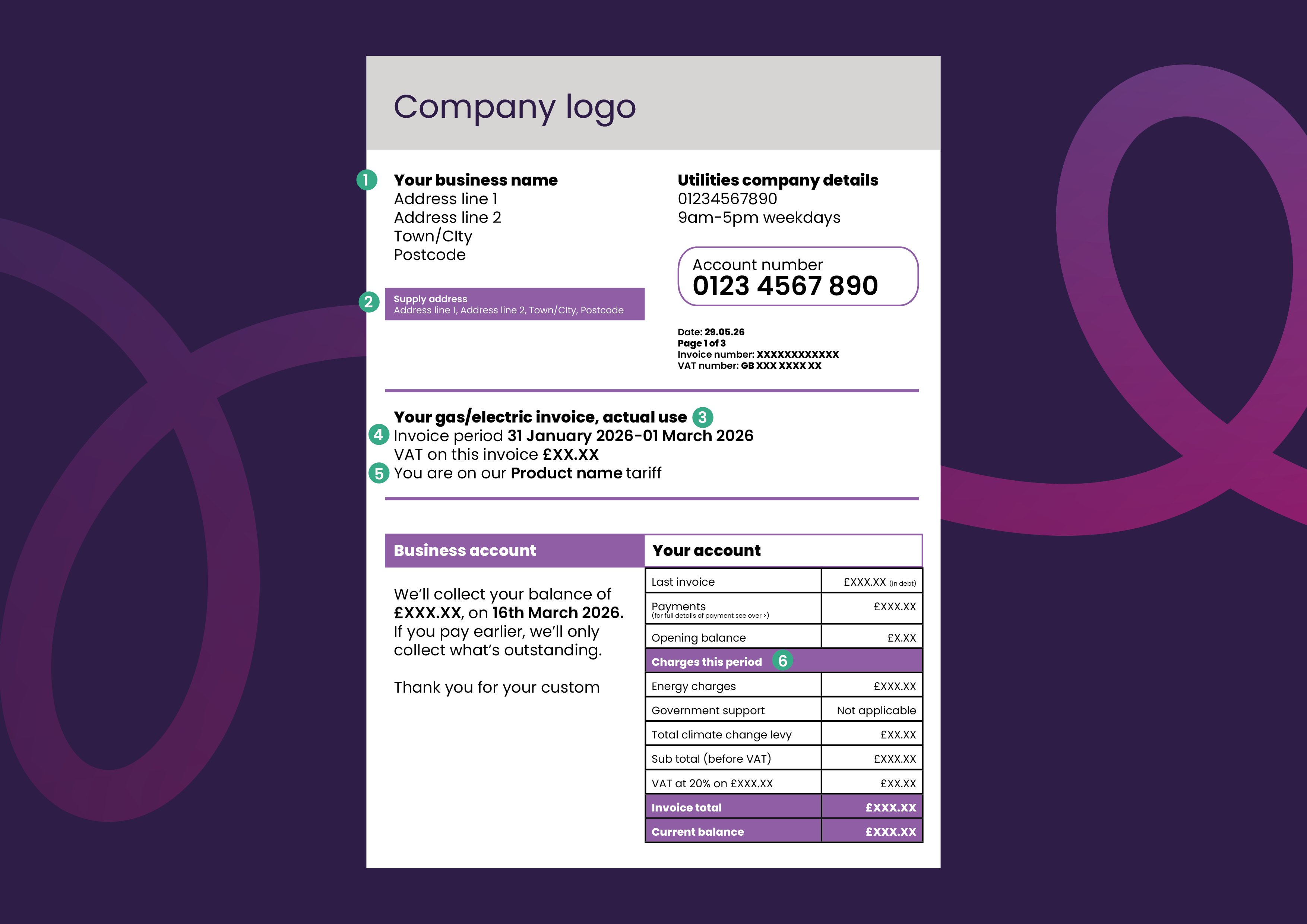
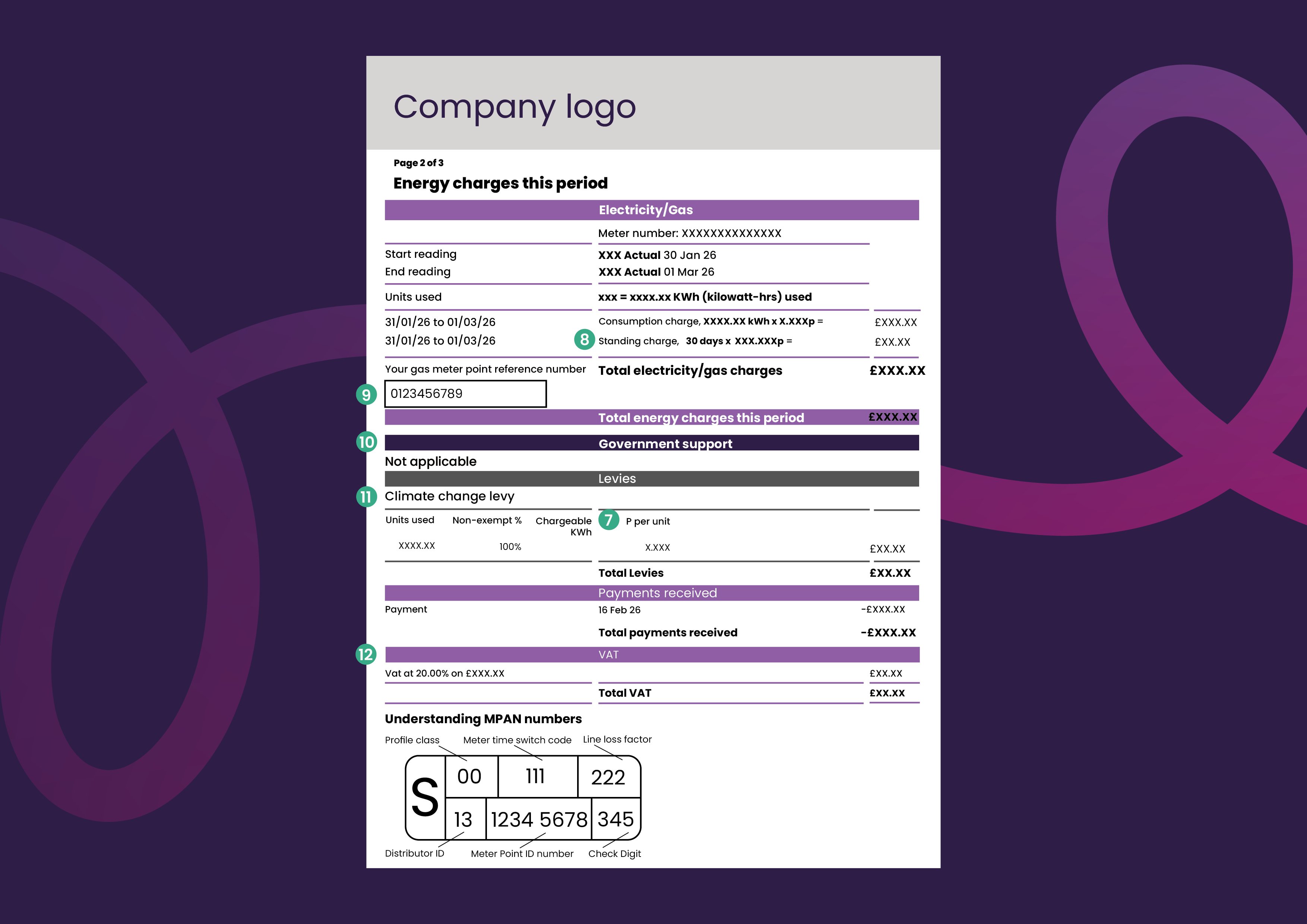
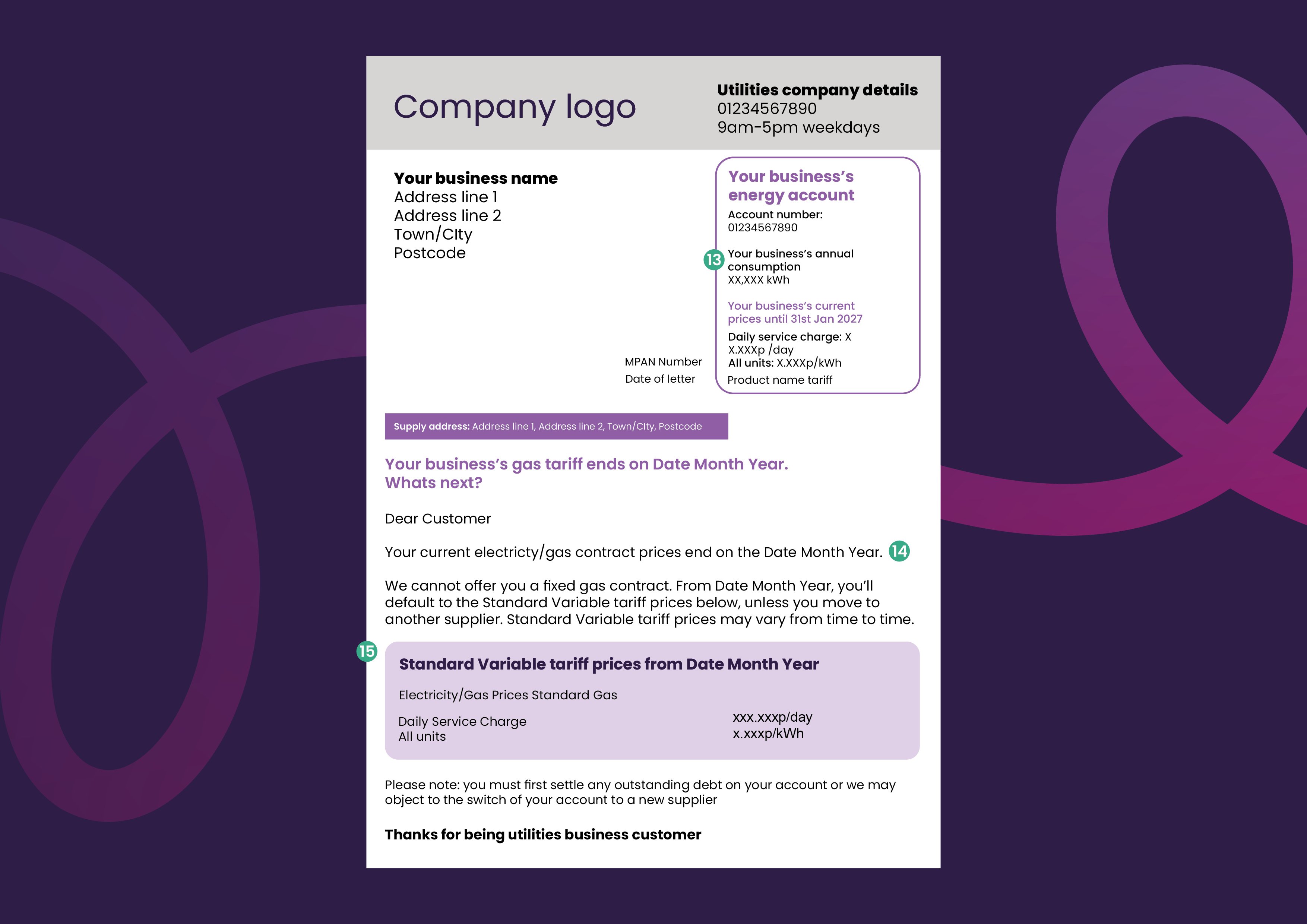
Check out our annotated examples of a typical electricity or gas bill below:

1. Billing address: This is usually your main site, headquarters or head office. It can be wherever you want your bills to be sent.
2. Supply address: This is the address connected by this specific energy supply. Some bills have multiple sites included.
3. Billing type (estimated vs. actual): Your energy bill may be based on estimated readings if your meter isn’t regularly updated. This can lead to overpaying or underpaying, followed by adjustments later. Providing regular readings or using a smart meter can help keep your billing accurate.
4. Invoice period: This shows the period you're being billed for. If your bill is £500, it means you owe £500 in total cost for the period between these two dates.
5. Tariff: This is the pricing plan that determines how much your business pays for electricity or gas. It sets the rates you pay for each unit of energy used, along with any fixed charges such as standing charges or non-commodity costs. More on those shortly.
6. Charges: This is a summary of charges.

7. Unit rate: This is the cost of the energy you use, measured in pence per kilowatt-hour (kWh). A low unit rate might look appealing, but it doesn’t necessarily mean lower bills if the standing charge or other costs are high.
8. Standing charge: This is the daily fee you pay to have energy supplied to your premises, whether you use any energy or not. It covers things like network maintenance and administration costs. Over time, it can make up a big part of your bill, so it’s worth checking if it’s on the high side compared to other suppliers.
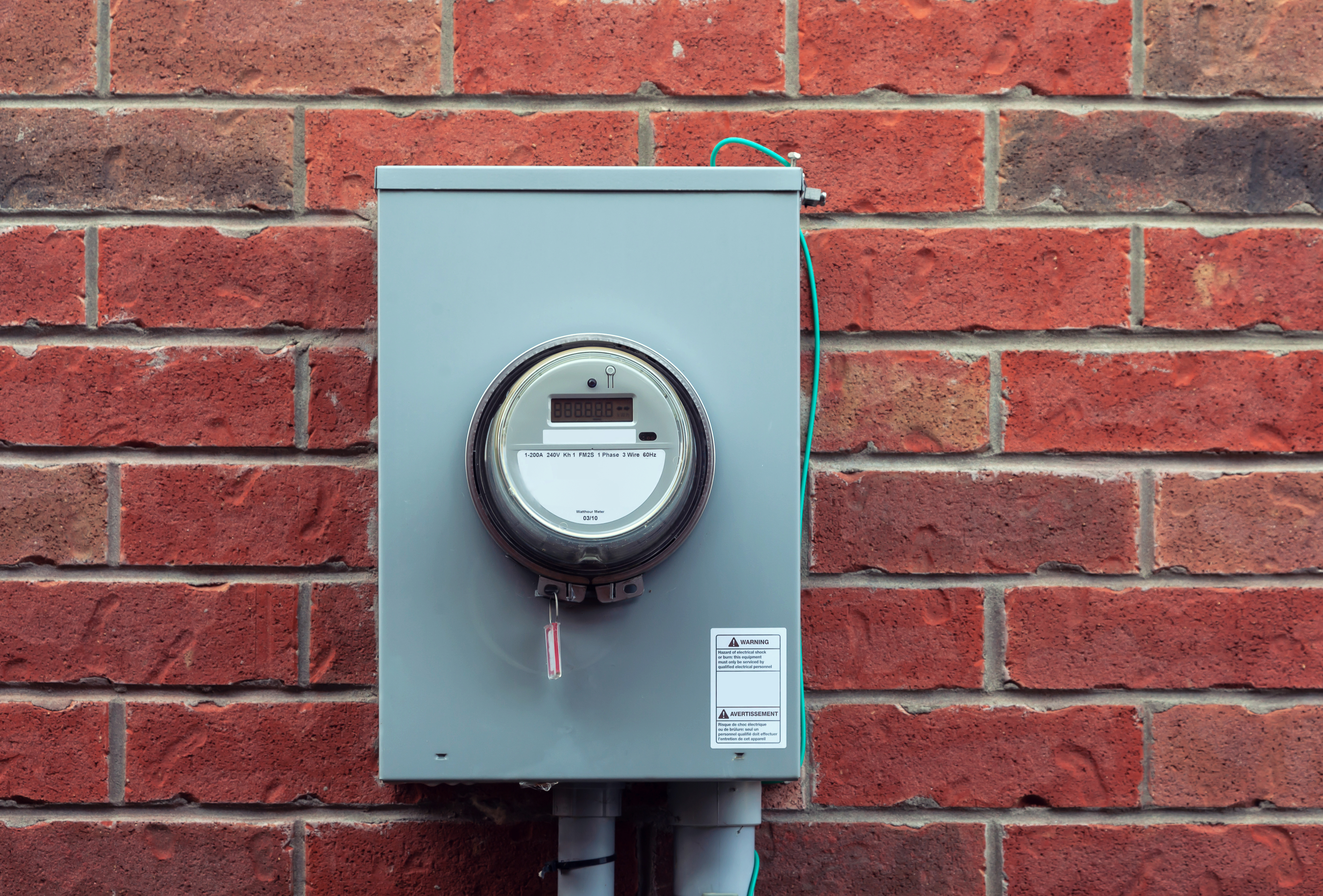
9. MPRN/MPAN: Gas bills come with an MPRN. This is a unique identifier, effectively like an account number. It will not show on your meter, only on your bill. Electricity bills come with an MPAN number. See the bottom of the bill above with the large 'S'? That's your MPAN. It is a code broken down into segments used to identify your supply.
10. Government support: This is where any government reliefs or schemes will be displayed.
11. Climate Change Levy (CCL): Your bill may include CCL, an environmental tax on energy consumption, unless you qualify for an exemption.
12. VAT: Most businesses pay VAT on energy at 20%, but some may qualify for a reduced rate of 5%.

13. Annual consumption: This shows your annual consumption. It may be an estimate based on this billing period.
14. Contract end date: This is when your current agreement ends. Contracts typically run for 12 months or 24 months but it is common for them to be longer. Longer contracts might offer a stable rate but could leave you stuck if market prices drop. Shorter contracts offer flexibility at higher rates.
15. Out of contract rates: These are the charges you’ll pay if your contract ends, and you don’t agree on a new one. They’re usually much higher than what you’d pay under a negotiated deal, so keeping track of your contract end date is essential.
Termination notice period: This is the amount of time you need to let your supplier know if you want to leave your contract. If you miss this deadline, you could be automatically rolled onto a more expensive deal. Typical notice periods range from 30 to 120 days, so it’s worth adding this date to your calendar as soon as you sign.
Early termination fees (exit fees): If you leave your contract before the agreed term ends, you could face charges. These fees vary by supplier but are often linked to the amount of energy you would have used over the remaining contract period.
Metering costs: Your contract might include fees for installing or maintaining your energy meter. For businesses that use a lot of energy, such as those with half-hourly meters, these costs can add up.
Understanding your business energy bill can help you spot hidden costs, avoid expensive contract mistakes and identify opportunities to reduce energy usage and lower your overall bills.
Here are a few ways to reduce costs just by knowing your way around an energy bill:
Avoid out-of-contract rates: for starters, simply knowing whether you're on a contract will help you avoid higher out-of-contract rates.
Review your usage patterns: knowing your usage and peak times can help you develop an average usage baseline, allowing you to monitor drops if you make efficiency savings.
Consider a smart meter: if your bills are based on estimated readings, you could be overpaying or underpaying. Smart meters take the hassle out of submitting readings so you pay correctly every time.
Business energy is confusing. You know you need to stay on top of such a major cost, but that can be difficult while focusing on running your business and serving your customers.
We get it. We can support you.
Troo exists to help businesses like yours make sense of their energy needs, simplify complex information and make smart decisions that lead to real change and reduced costs.
We are not here to sell you a quick fix. We're here to understand what matters to you, offer clear advice, and take ownership of the hard parts, so energy becomes one less thing to worry about.
Book a free energy health check today for practical guidance on your business electricity, gas or water bills.
Your business energy bill arrives in the post every month. Multiple pages of dense black and white text. You didn't go into business to sift through...
You’re closed, it’s the holidays, your business site is empty, but you’re still racking up an energy bill. That’s the standing charge.
To fix, or not to fix, that is the question.