Renewable energy for business FAQs: Your questions answered
Renewable energy is a boom everybody seems to be taking advantage of.
3 min read
Michael Potts
:
Jul 9, 2026 10:00:00 AM
Renewable energy is a boom everybody seems to be taking advantage of.
From the rapid rise of electric vehicles (EVs) to increased usage of solar panels and wind turbines for on-site generation, more businesses are finding ways to integrate new technology into their existing set-up.
It’s exciting. New tech, new ideas, new systems come with new opportunities to reduce costs, boost efficiency and build defences in an increasingly unstable world.
However, getting started remains the hardest part.
It can feel daunting to move away from tried-and-tested methods to embrace change. We get it.
That’s why we have created this renewable energy FAQs cheat sheet, to discuss some of the key talking points around green energy to help businesses make informed decisions.
In this article:
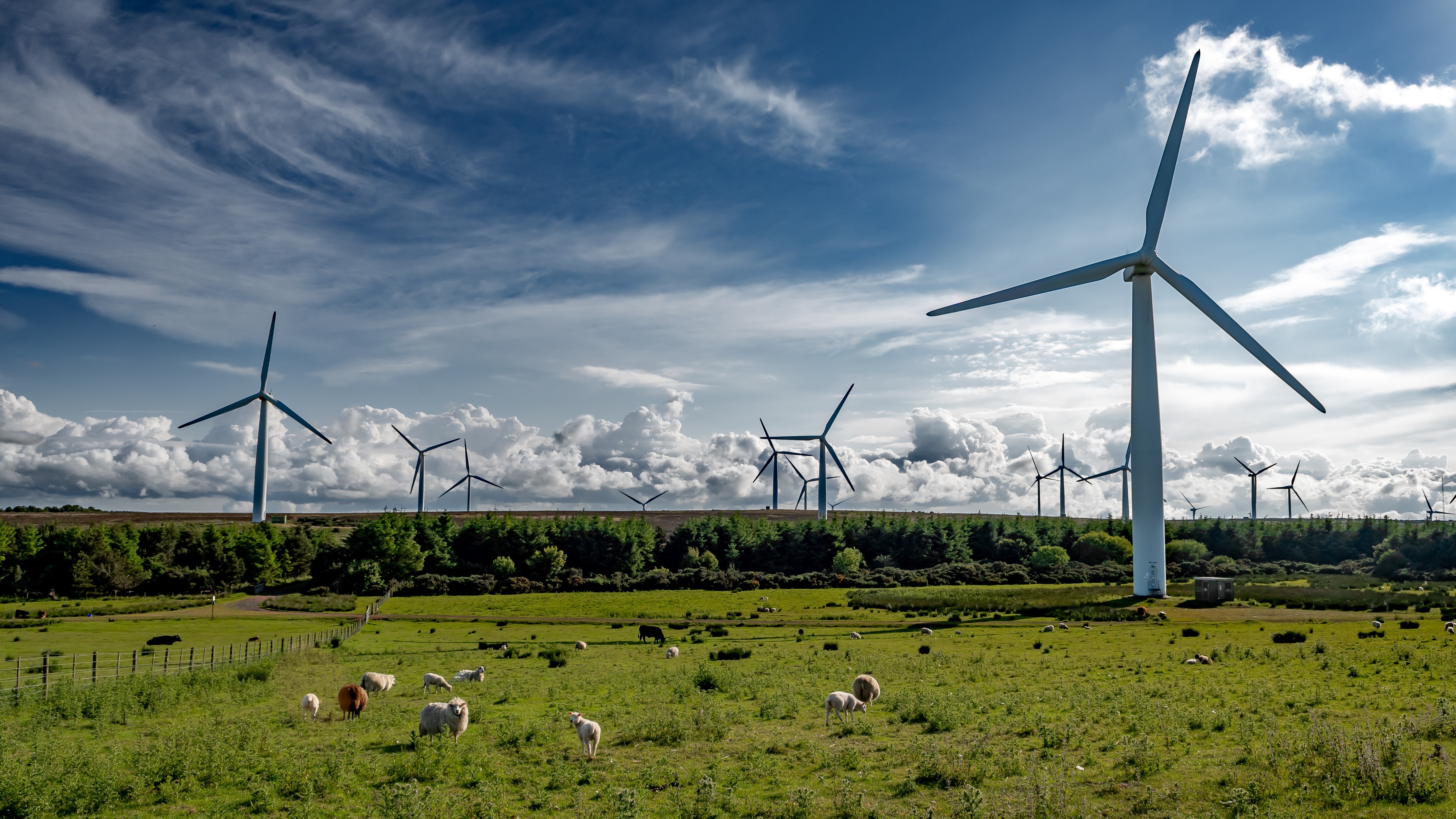
Solar and wind are frequently seen as the most environmentally friendly sources of renewable energy.
A study by the United Nations Intergovernmental Panel on Climate Change (IPCC) has listed the median level of CO2 equivalent per kWh of electricity produced for various sources.
Nuclear energy is virtually emission-free but is technically not a renewable source, while hydroelectricity is efficient but can disrupt local ecosystems.
Solar and wind offer a good balance of low carbon emissions, cost and wider environmental impact.
Most businesses don’t require planning permission for rooftop solar panels or wall-mounted electric vehicle (EV) chargers.
Larger ground-mounted panels, including ‘solar farms’, do require planning permission, usually handled by your Local Planning Authority (LPA).
Wind turbines, plus certain elements of biomass and larger battery storage systems, generally do require planning permission.
Solar power requires sunny skies. Wind power requires windy weather. It’s normal to wonder what happens when the conditions aren’t right.
Using a mix of sources, solar and wind on top of a low level traditional grid supply covers bases to ensure you’re able to capitalise on renewable energy without exposing yourself to outages.
Battery storage also means you can store excess energy during particular sunny or windy spells for use at other times.
Solar panels typically deliver a return on investment within 6-10 years because every unit generated is a unit you don't have to buy from the grid.
Panels typically come with a 25-year performance warranty, meaning they are expected to retain around 80-90% of their original efficiency by then.
Many panels continue generating electricity beyond this period at reduced efficiency.
Your average unit rate could potentially drop to around 3-4p per kWh, down from an average of 20-30p, though rates will vary.
The benefits extend beyond cost. On-site generation offers greater energy independence.
Homegrown energy offers protection from future price spikes and market volatility.
Yes! On-site generation could open a whole new revenue stream for your farm or rural business.
If you generate a surplus - more than you need - you can sell electricity back to the grid through a process called exporting.
Businesses that generate surplus electricity may benefit from the Smart Export Guarantee (SEG), which pays organisations for exporting excess power back to the grid, opening up a potential new revenue stream.
Typical renewable energy equipment requires minimal upkeep.
Solar panels require very little maintenance beyond cleaning dirt and routine inspections due to a lack of moving parts. However, if something more substantial does go wrong, it may be costly to correct.
Wind turbines require more maintenance to keep the blades in optimal condition. Regular servicing on an annual or biannual basis is recommended.
Biomass systems also require maintenance and regular safety testing to ensure maximum performance.
Many people are put off renewable energy by upfront costs without exploring the various grants and tax reliefs available to help.
One of the most widely used schemes is the Annual Investment Allowance (AIA), which allows businesses to claim up to 100% tax relief on qualifying capital expenditure, including some renewable energy technologies.
Battery installations currently qualify for 0% VAT.
It’s tricky to know where to start with renewable energy for business. The boom feels new and overwhelming. There’s a lot of noise. You can’t separate the truth from myths and rumours.
We get it. We can support you.
Troo exists to help businesses like yours make sense of their energy needs, simplify complex information and make smart decisions that lead to real change and reduced costs.
We are not here to sell you a quick fix. We're here to understand what matters to you, offer clear advice, and take ownership of the hard parts, so energy becomes one less thing to worry about.
Book a free energy health check today to explore renewable energy options for your business.
Renewable energy is a boom everybody seems to be taking advantage of.