3 min read

How battery storage can help you save on business energy costs

How battery storage can help you save on business energy costs
4:39

Your solar panels could be delivering a bigger return on investment than they are today.

Renewable energy for business is no longer just about sustainability. It's a practical way to reduce costs, improve resilience and gain greater control over your business energy.

Solar panels and wind turbines generate electricity when the sun is shining and wind is blowing, but what happens when you’re generating more power than you can use?

That’s where commercial battery storage comes in.

Homegrown energy is a precious resource; don’t let it go to waste. Battery storage captures excess energy for use through the night or when weather conditions aren’t suitable for generation.

In this article:

    • Learn what commercial battery storage is.
    • Understand how battery storage can benefit businesses.
    • Discover the pros and cons of exporting excess electricity versus storing it.

What is commercial battery storage?

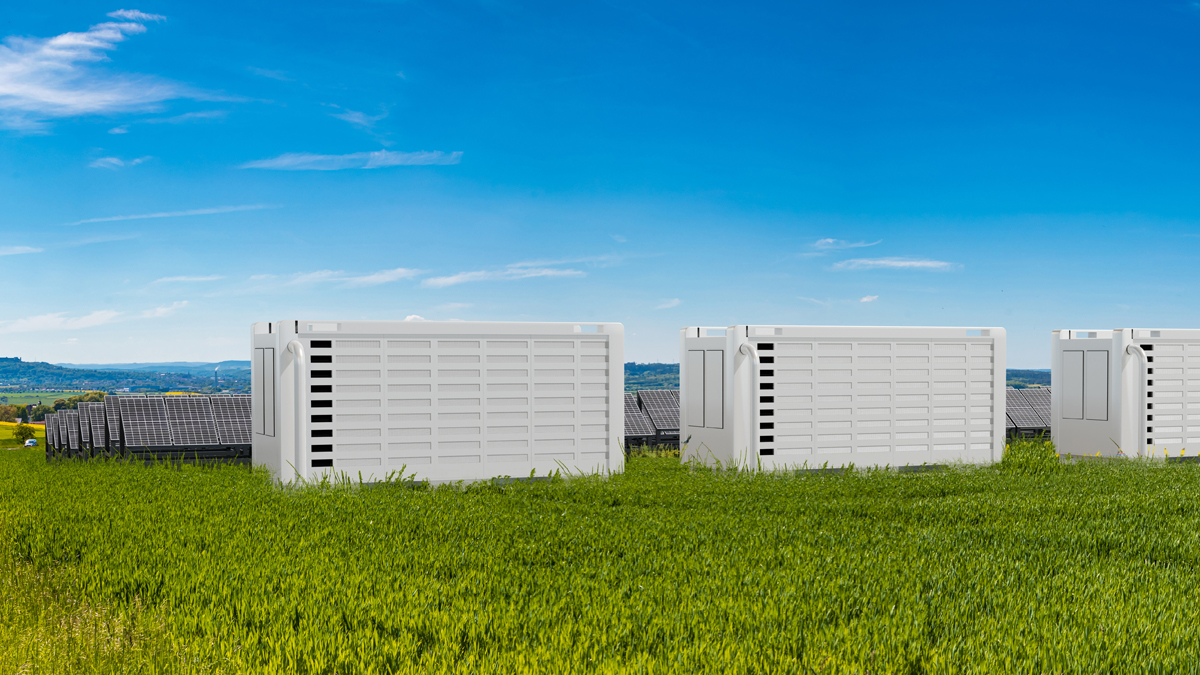
Commercial battery storage is often referred to as a Battery Energy Storage System (BESS).

At its simplest, a BESS allows your business to store energy during cheaper, off-peak periods or when your on-site renewables generate excess power.

You can then use this stored energy during peak times when grid electricity is more expensive.

Think of it as banking cheap electricity for when you need it most.

It’s a practical way to gain control over unpredictable energy bills and maximise savings from your energy contracts.

Who could benefit from battery storage?

Businesses with on-site renewable generation are among the biggest beneficiaries of battery storage because they can store excess electricity instead of exporting it or letting it go to waste.

Battery storage can also benefit businesses on time-of-use tariffs, with or without renewable energy generation, and even workplace EV charging, allowing them to buy cheaper overnight electricity and use it during expensive daytime periods.

Four ways battery storage can help your business

  • Lower peak energy costs: Energy prices fluctuate throughout the day. Time-of-use tariffs mean businesses can charge up their battery overnight on cheap rates and deploy during the day to take the edge off daytime peak prices - or bypass them completely.

  • Reduce demand charges: Many businesses don’t realise they pay demand charges based on the highest amount of power their business uses at one time. Battery storage smooths out these spikes by releasing stored energy during periods of high demand, reducing the amount of grid power you need.

  • Protect against rising prices: The energy market can be unpredictable, and price increases are not uncommon. Battery storage reduces your reliance on buying electricity at unpredictable market prices, helping protect your business from future price increases.

  • Maintain supply during power cuts: Some battery storage systems can run like a back-up generator in case of power cuts. If your business simply cannot afford downtime, battery storage could provide a solution.

Should you export excess renewable electricity or use battery storage?

Exporting is the process of selling excess energy back to the national grid for a set rate under the Smart Export Guarantee (SEG) scheme or via a Power Purchase Agreement (PPA).

The idea of selling units of energy is appealing; electricity becomes another product you can sell to a customer.

However, storing that electricity may deliver greater long-term value than exporting it.

Excess electricity can be sold back to the grid via SEG for around 15p per unit (kWh), but you may then need to draw electricity from the grid overnight at around 25p per unit to keep the power flowing given the obvious lack of sunlight required for solar panels.

Storing excess energy throughout the day means you can deploy it overnight, reducing your reliance on the grid. Every excess unit of electricity stored during the day is a unit you don’t need to buy.

Of course, the downside to battery storage is the fact you need to buy and install the infrastructure, meaning you should investigate the return on investment before diving in.

Whether exporting or storing electricity delivers the greatest value depends on your export tariff, electricity prices, usage and battery costs. Many businesses benefit from a combination of both.


Export electricity

Store electricity

Financial benefit

Immediate income

Ongoing reduced unit rates

Upfront investment

None

High, to purchase battery

Value depends on…

SEG/PPA export rates

Grid electricity unit rates

Best suited for…

Selling surplus energy quickly

Maximising self-consumption

Energy resilience

Low impact

High impact


How can we help

It’s tricky to know where to start with renewable energy for business. The boom feels new and overwhelming. There’s a lot of noise. You can’t separate the truth from myths and rumours.

We get it. We can support you.

Troo exists to help businesses like yours make sense of their energy needs, simplify complex information and make smart decisions that lead to real change and reduced costs.

We are not here to sell you a quick fix. We're here to understand what matters to you, offer clear advice, and take ownership of the hard parts, so energy becomes one less thing to worry about.

Book a free energy health check today for practical guidance on your business electricity, gas or water bills.

Do businesses need planning permission for renewable energy?

Do businesses need planning permission for renewable energy?

You want to install renewable energy for business on your site. But will your local planning authority let you?

Read More
What is SECR? The UK reporting scheme your business may need to comply with

What is SECR? The UK reporting scheme your business may need to comply with

Streamlined Energy and Carbon Reporting (SECR) may feel like just another box-ticking regulatory exercise.

Read More
How your business can reach Net Zero - and reduce energy costs

How your business can reach Net Zero - and reduce energy costs

Net Zero is one of the hottest topics for businesses across the UK - but what does it actually mean for you?

Read More