 Melvyn Wilson
Does the energy price cap apply to businesses?
The energy price cap is frequently talked about in the news, but does it affect business energy contracts?
Energy markets are highly volatile as we enter August, largely driven by geopolitical tensions in the Middle East.
The dominant theme throughout the month was the ongoing conflict and diplomatic uncertainty between the United States and Iran, which raised persistent concerns over LNG and crude oil flows through the Strait of Hormuz.
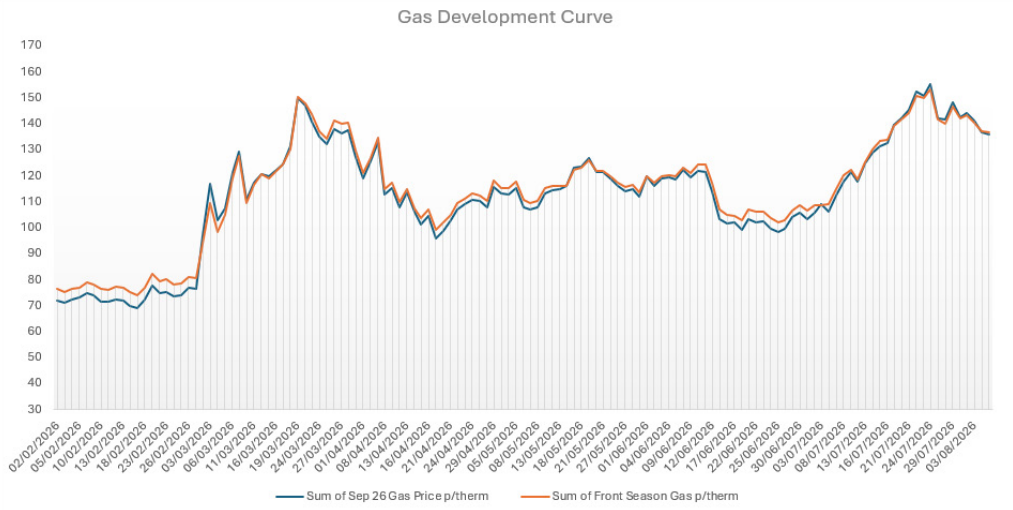
UK gas prices rose sharply during the period, with front-month contracts increasing by over 40% during July before coming down slightly as negotiations between the US and Iran intermittently improved tensions.
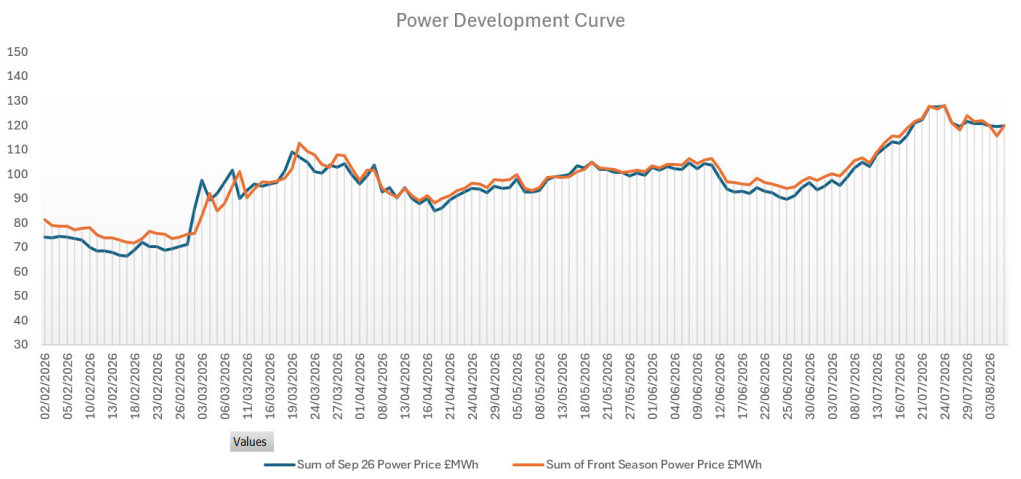
Electricity prices followed a similar trajectory, pushed up by the higher gas costs, elevated carbon prices and challenging generation conditions across Europe.
But what does August have in store for businesses in the UK?
Troo energy trading expert Melvyn Wilson offers his guidance to help break down the major forces driving wholesale energy prices this week.
In this article:
Learn how global energy markets are moving in August 2026.
Understand the issues affecting business energy prices today.
Discover what your business can do to manage risk in an unstable world.
Going into August, geopolitical developments in the Middle East are expected to remain the single most important driver of energy markets.
A credible and lasting diplomatic agreement could reduce supply concerns and allow gas and power prices to soften, particularly given stable Norwegian supply and continuing storage injections.
However, any deterioration in negotiations, renewed military escalation, or further disruption to energy shipping routes could quickly trigger another wave of price increases.
With European storage levels still materially below last year’s position, LNG availability remaining uncertain, and winter demand approaching, market volatility is expected to remain elevated.
For now, geopolitical risk continues to outweigh underlying supply fundamentals, leaving energy markets biased towards caution and vulnerable to further price shocks.
You can see the impact of the US/Iran conflict on gas prices from the end of February.
You can see the impact of the US/Iran conflict on power prices from the end of February.
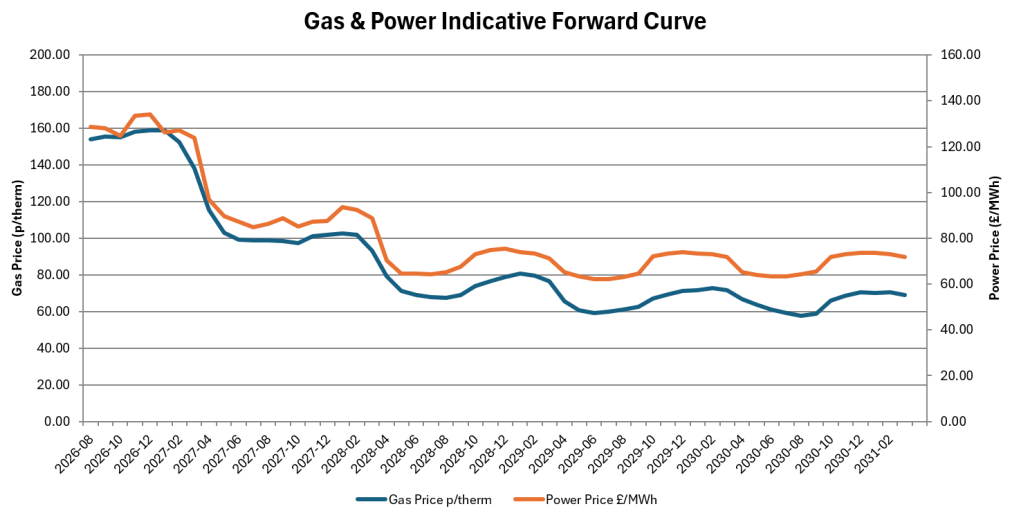
Prices further along the curve remain discounted to 2026 levels, although they have tracked higher during July following the Middle East escalation. The Winter 2027 power price is trading around £85MWh (8.5/ KWh) up £7MWh from the start of July.
The world is changing. It can be scary. You know you need to stay on top of the news, but that can be difficult while focusing on running your business and serving your customers.
We get it. We can support you.
Troo exists to help businesses like yours make sense of their energy needs, simplify complex information and make smart decisions that lead to real change and reduced costs.
We are not here to sell you a quick fix. We're here to understand what matters to you, offer clear advice, and take ownership of the hard parts, so energy becomes one less thing to worry about.
Book a free energy health check today for practical guidance on your business electricity, gas or water bills.
The energy price cap is frequently talked about in the news, but does it affect business energy contracts?
 Melvyn Wilson: Aug 24, 2026, 2:30:00 PM
Energy markets are riding a rollercoaster in 2026 - and your business is paying for it.

Business energy efficiency isn’t about switching lights off and watching your usage drop.