3 min read

What is half-hourly metering? Why millions of businesses are switching

What is half-hourly metering? Why millions of businesses are switching
5:17

Most businesses know how much electricity they use each month. Far fewer know precisely when they use it. That's where half-hourly metering comes in.

Instead of relying on occasional readings, half-hourly meters record your electricity usage every 30 minutes, giving both suppliers and businesses a much clearer picture of energy consumption.

With the rollout of Market-wide Half-Hourly Settlement (MHHS), understanding how half-hourly metering works is becoming increasingly important for businesses of all sizes. We’re here to help.

In this article:

  • Learn what half-hourly metering means and how it works.
  • Understand which businesses need half-hourly meters.
  • Discover how to make the most of half-hourly data to cut your energy bills.

What is half-hourly metering ?

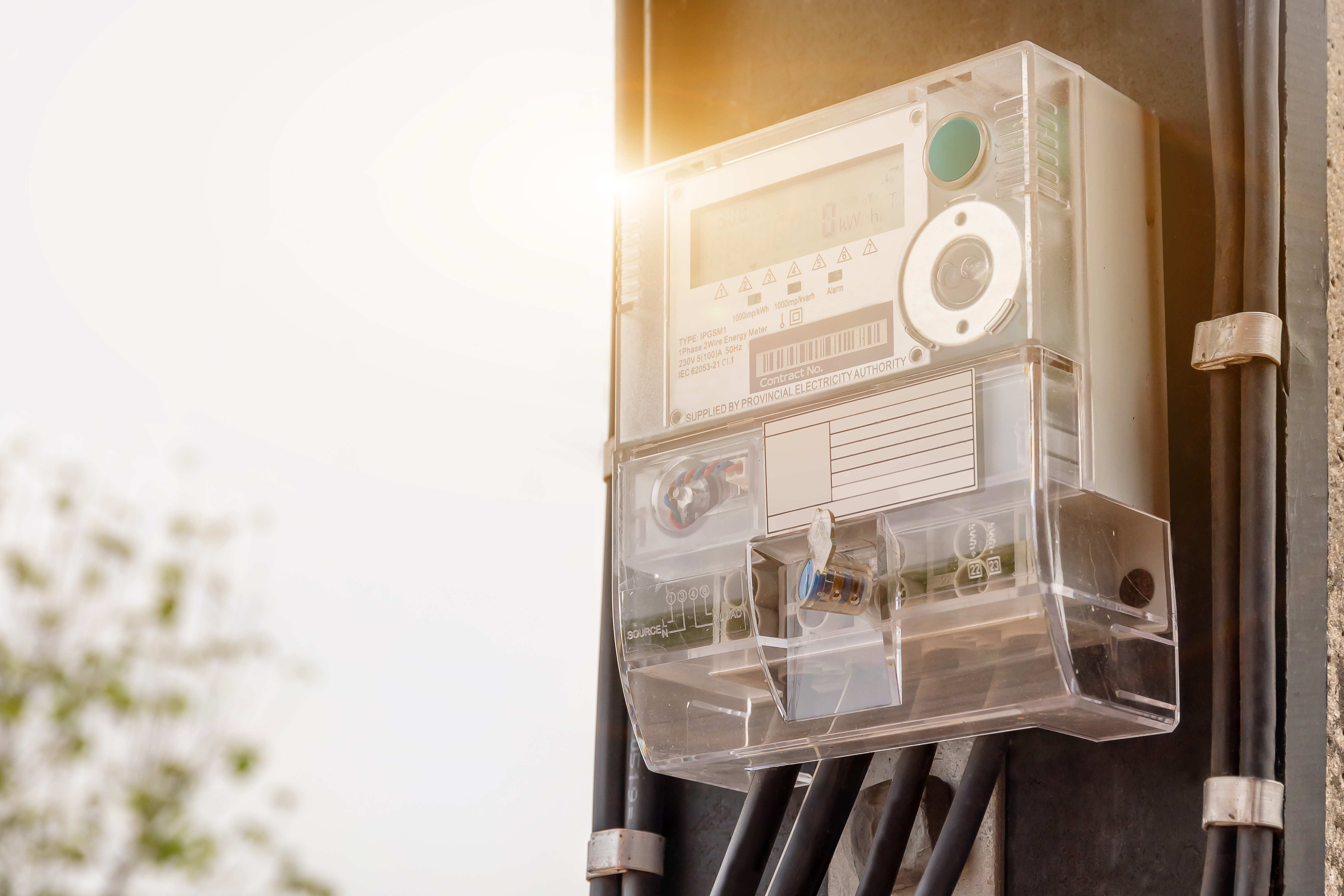
A half-hourly meter automatically records your electricity usage every 30 minutes and sends readings directly to your supplier.

Standard meters require manual readings at regular intervals to provide accurate monthly bills. They can tell you how much energy you used in a month. And that’s about it.

The benefit of half-hourly metering is that you can accurately monitor when you are using energy throughout each day, offering the potential to make changes that reduce your energy costs.

HH metering also ensures power grid operators have a clearer picture of when people use power to accurately match demand with the right level of supply.

Which businesses need half-hourly metering ?

Half-hourly meters are required for any UK business who use 100 kVh or higher in a 30-minute period more than three times in a year. Basically, intensive energy users are required to use them.

It is common for businesses to have advanced meters (AMR) installed on their site(s) to handle the half-hourly data capture and send readings to suppliers.

Businesses with energy usage below the threshold may still request a half-hourly meter to reap the benefits of being able to monitor granular data.

An ongoing scheme is speeding up the transition to HH metering.

Why is half-hourly metering becoming more important ?

A new scheme, the Market-wide Half-Hourly Settlement (MHHS), is the reason many businesses are suddenly hearing about half-hourly data.

It’s big news and you need to know how it will impact your business.

MHHS will require all electricity suppliers to use half-hourly data, not just high users. The rollout of new meters and behind-the-scenes infrastructure upgrades started in October 2025.

More than 30 million domestic and business energy supplies across the UK will move to half-hourly metering. With one year to go until the May 2027 transition deadline, the MHHS Programme confirmed they had reached 10 million initiations. 

How to make the most of half-hourly metering ?

If your business is equipped with a smart meter or advanced meter, you’ll likely be affected, but don’t worry: MHHS offers plenty of benefits.

This is what you need to do to make sure you feel the benefits of MHHS:

  1. Check whether you are already on a half-hourly meter to benefit today: Find your MPAN number on your latest electricity bill. If the number in the top left box of the MPAN (after the ‘S’) is 00, you are on a half-hourly meter. You can use the data immediately.
  2. Consider installing a smart or advanced meter (AMR) to avoid unexpected bills: If you don’t already have a smart or AMR meter, you don’t need to upgrade. However, from May 2027, suppliers would continue to use profiling methods to calculate your bills. You won’t be penalised, but you won’t enjoy the same benefits as other businesses on HH meters.
  3. Monitor your energy usage to spot usage patterns: Once you’re activated on a half-hourly system, don’t just ignore it. Look at the numbers. Look at the data. Spot any patterns? This is your opportunity to spot peak times and unexpected usage spikes.
  4. Act on the data to reduce your costs: Once you have assessed the data and spotted trends, develop an action plan. For example, if you notice you’re using a lot of energy after hours, you can take steps to cut that usage, save waste and boost your bottom line.
  5. Look out for new tariffs to save more in future: The MHHS rollout is expected to encourage a wave of new time-of-use tariffs that offer favourable unit rates during off-peak times. Keep your eyes open to new deals that could slash your bills.

How we can help

Business energy is confusing. You know you need to stay on top of such a major cost, but that can be difficult while focusing on running your business and serving your customers.

We get it. We can support you.

Troo exists to help businesses like yours make sense of their energy needs, simplify complex information and make smart decisions that lead to real change and reduced costs.

We are not here to sell you a quick fix. We're here to understand what matters to you, offer clear advice, and take ownership of the hard parts, so energy becomes one less thing to worry about.

Book a free energy health check today for practical guidance on your business electricity, gas or water bills.

What is half-hourly metering? Why millions of businesses are switching

What is half-hourly metering? Why millions of businesses are switching

Most businesses know how much electricity they use each month. Far fewer know precisely when they use it. That's where half-hourly metering comes in.

Read More
Energy market update: What UK businesses need to know this week

Energy market update: What UK businesses need to know this week

Energy markets are riding a rollercoaster in 2026 - and your business is paying for it.
Read More